Separate what stays from what goes
A clear-out often happens alongside a house move, but the two jobs need different instructions. Set aside anything you want to keep, donate or move to another address before asking for a clearance quote.
Tell DNE what you need removed and where it is stored. “A few bags” can mean very different things, so include photographs showing the full collection and list the materials. We will need to confirm whether the items can be accepted before a collection is agreed.
Information that makes a quote more useful
- A list of furniture, bags, boxes and loose materials.
- Approximate quantities and any unusually heavy items.
- Whether the collection is indoors, upstairs, in a garden or in an outbuilding.
- The access route, gates, steps and space for a vehicle.
- Any deadline linked to a tenancy handover or property move.
Do not hide heavy materials in bags or mix unidentified substances into a load. If there are chemicals, asbestos, paint, gas cylinders or other potentially hazardous items, flag them before any arrangements are made. This page does not offer specialist hazardous-waste removal.
Check the collection and disposal arrangements
Before handing waste to a private business, check the relevant waste-carrier registration. The GOV.UK household waste guidance explains how to do this and links to the public registers.
Ask DNE to confirm who will collect the waste, the applicable registration and the paperwork for your job. We do not publish a licence number or recycling percentage without verified supporting information. A removal quote and a waste-collection agreement are not interchangeable.
What affects the price?
The contents matter as much as the amount. Access, handling time, weight and disposal requirements can affect the assessment. Photos taken from more than one angle help show whether an apparent small pile extends behind furniture or through another room.
Ask for a clear description of what the agreed price covers. If you add items afterwards, send an updated list rather than assuming they can be taken for the same amount.
Clearing out before a home move
Label the items for the new address separately and keep that list with your home removal enquiry. For materials on a working site, see site clearance.
Send the item list to DNE or call 07596 193985 to discuss the collection.
Common clearance situations to describe
People often get in touch after sorting a room, preparing a property for a handover or separating unwanted items during a move. Those situations can produce very different loads. A few bulky pieces in a clear ground-floor room are not the same job as mixed bags spread through a house, an upstairs flat or an outbuilding reached through a narrow gate.
Use your enquiry to explain where the items are, how they are grouped and what must remain. If you are clearing a property on someone else’s behalf, make sure you have authority to identify the items for removal. Keep anything to retain, donate or move elsewhere clearly separate from the collection.
Photograph the whole load
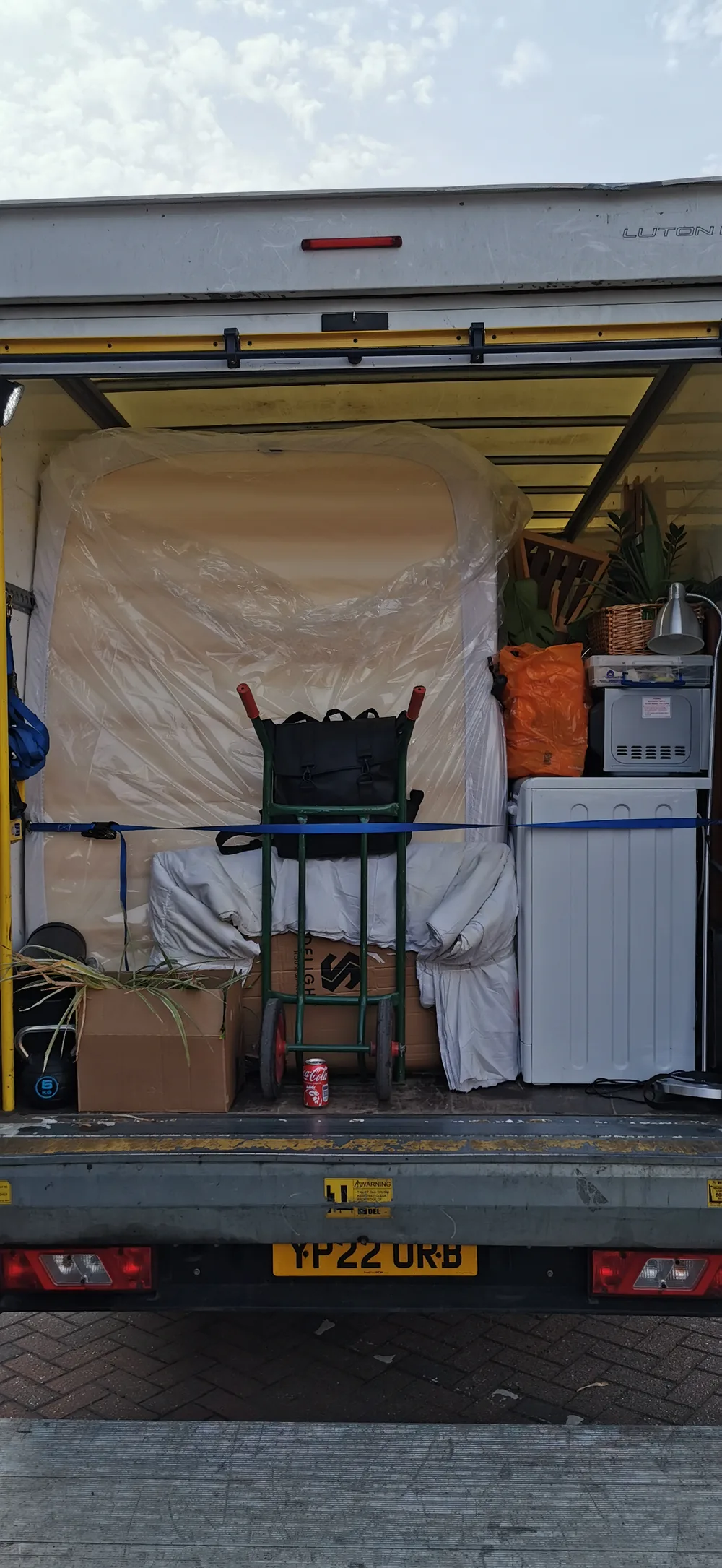
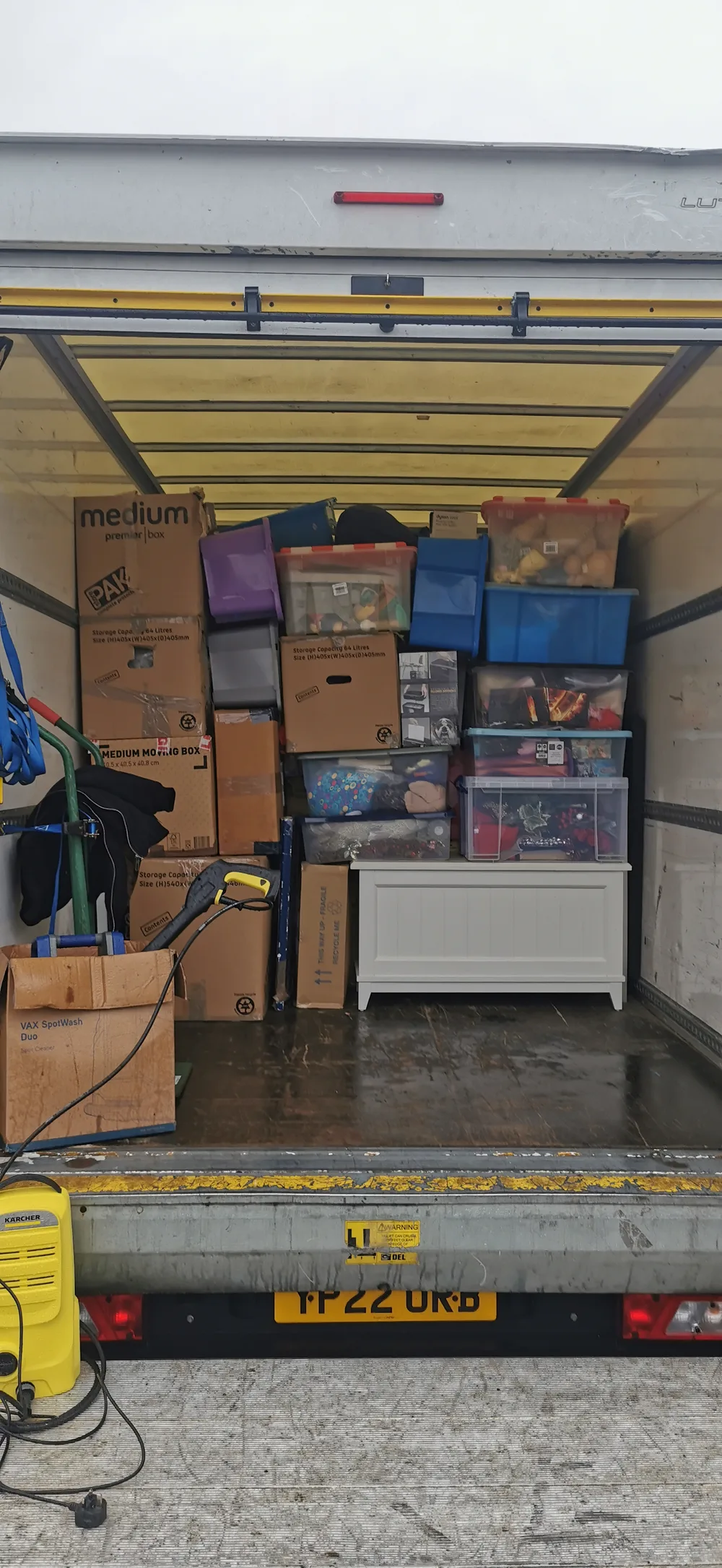
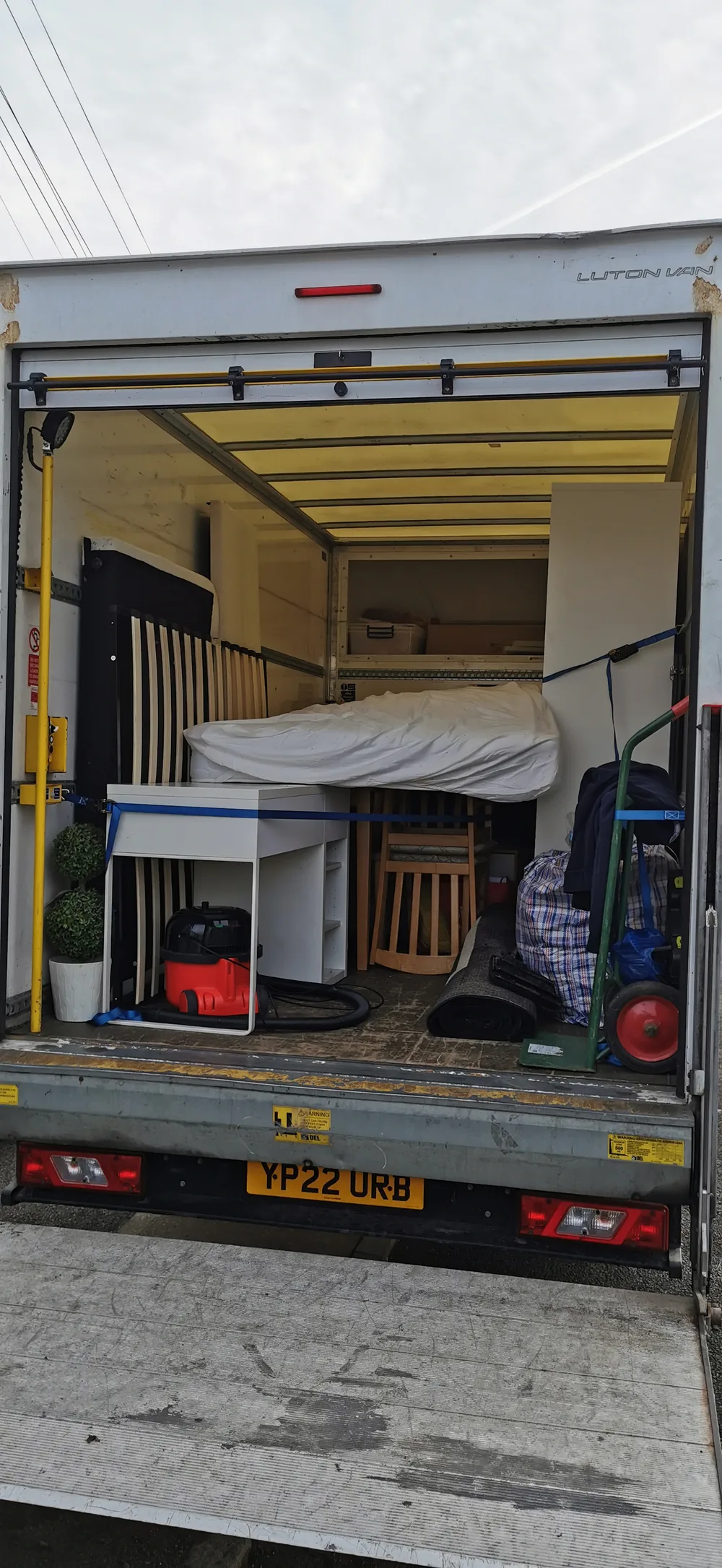
Take wide photographs that show the amount and location of the material, then add closer views if an item is unusual, heavy or difficult to identify. A written list still matters: a photo may hide items behind a pile or make mixed materials look alike. Include stairs, gates, a long carry or any parking restriction that affects reaching the collection point.
Do not dismantle or move heavy items into a more difficult position just to take a photograph. Flag uncertainty instead. If something may contain a hazardous substance, keep it separate and tell DNE what you know about it. Do not mix it into ordinary household items or leave its contents unidentified.
Agree the load before collection
The collection should match the list and material types that have been discussed. Before the date is confirmed, ask DNE to clarify what can be accepted, what is excluded, who is responsible for the relevant paperwork and what the quoted amount covers. A later addition may change the vehicle, handling time or disposal requirements, so send an updated list before the team arrives.
For household waste, the GOV.UK guidance on disposing of household waste explains how to check a private waste carrier. For business material, see the separate GOV.UK business and commercial waste guidance. Keep any transfer documentation provided for your records.
Timing a clearance around a move
If the clearance is part of a home move, decide which belongings are travelling before you request either job. Send DNE the clearance list separately from the home removal inventory and explain if both collections depend on the same key or access window. For material left after commercial work, use our site clearance information and describe the project rather than assuming household-waste arrangements apply.
Agree how the collection will be recorded
Before the date is confirmed, make sure the written arrangement describes the materials and approximate quantity, the collection address, access, the agreed price and any exclusions. For business waste, confirm who is responsible for the required transfer documentation and keep the records supplied for the job. If the load changes after the quote, send a fresh list and ask DNE to confirm whether the collection terms still apply. This avoids leaving the crew to decide on site which belongings are authorised to go.
Your questions, answered
What should I send for a rubbish clearance quote?
Send an item and material list, approximate quantities, clear photos of the whole load, the collection address, access details and your preferred date.
Can you take every type of waste?
No blanket acceptance is offered. Describe all materials in advance so DNE can confirm suitability and the correct arrangements. Hazardous or unidentified materials need particular attention.
Can I get a price from photos?
Photos help with the assessment. Include the whole load, access and a written item list. The price and any conditions must be confirmed by DNE before collection.
Do I need to check the waste carrier?
Yes. Before agreeing a collection, check the relevant registration on the public register and ask who is responsible for the required waste documentation. GOV.UK explains how to check a waste carrier.
Can you clear a property before a tenancy handover?
Share the handover date and the full list of items as early as you can. DNE must confirm whether the load, access and timing can be accommodated; do not treat an enquiry as a confirmed collection.